Herniated Disc vs. Bulging Disc vs. Slipped Disc in Fayetteville: What's the Difference?
Your MRI says one thing, your doctor says another, and a coworker swears you slipped a disc. Here's what the three terms really mean, why the label matters less than you'd think, and what Fayetteville patients can do about it.
Your MRI report says "bulging disc." Your doctor called it a "herniated disc." Your brother-in-law says you "slipped a disc." Three different words for one aching back, and nobody has explained which one is right.
If that's where you are, you're in good company. It's one of the first things people here in Fayetteville ask us, and the confusion makes sense, because the three terms get used as if they mean the same thing. They don't. The differences are simple, and knowing them takes a lot of the fear out of the diagnosis.
The short version. A bulging disc is pushing outward but is still intact. A herniated disc has a tear in its outer wall, and softer material has pushed through. "Slipped disc" isn't a medical term at all. It's everyday talk for either one, because discs don't actually slip out of place. What matters most isn't the label. It's whether the disc is pressing on a nerve, and where. That's what an exam works out, and it's what decides what will help.
What your discs actually do
Between each of the bones in your spine is a disc, a cushion with a tough outer wall and a softer center. Every time you sit, lift, twist or climb out of the car, your discs take the load and spread it out. They're built for that, but years of it, or one bad lift, can wear them down.
Around Fayetteville, the stories behind disc trouble sound alike. A desk job off College Avenue. A shift in a warehouse or distribution center. A student hauling a loaded pack across the U of A campus. A weekend lifting at the gym or logging miles on the Razorback Greenway. Or just years of driving up and down I-49. None of that causes a disc problem on its own, but steady load on a spine that's already tired is usually what makes it impossible to ignore.
Bulging disc: pushed out, but still in one piece
Picture a tire bulging at the sidewall. The disc has pushed outward past where it should sit, but its outer wall hasn't torn.
Here's the part that surprises people: a bulge isn't automatically the problem. In a New England Journal of Medicine study that scanned 98 people with no back pain at all, more than half had a bulging disc at one level or more. So if "bulging disc" is on your report, it may be real and still not be the thing that hurts. That's one reason the exam matters as much as the picture.
Herniated disc: when the outer wall tears
A herniated disc goes a step further. The outer wall has torn, and some of the softer center has pushed through. That material, and the inflammation around it, can irritate a nearby nerve. That's when it gets loud.
In the lower back, that often means pain, numbness or tingling that travels into your hip and down your leg. In the neck, it can run into your shoulder and down your arm, and make it hard to get comfortable at night.
"Slipped disc": a nickname, not a diagnosis
"Slipped disc" is the everyday phrase for either of the above. It makes it sound like a disc popped out of place and needs to be pushed back in. That isn't how discs work. They're attached; they don't slide around like a loose bone.
That's why we'll never tell you we're putting a disc "back in place." What we can do is take the pressure off the disc and the nerve it's irritating, and restore motion to the joints around it. That's what most disc pain responds to.
At a glance
- Bulging disc: pushed outward, outer wall intact. Often causes no symptoms, and it's common even in people with no pain.
- Herniated disc: outer wall torn, softer center pushed through. The one most likely to irritate a nerve.
- Slipped disc: the everyday name for either one. Not a medical term.
Why the label matters less than where it's pressing
Two people can have the same words on their reports and feel completely different. One barely notices. The other can't sit through dinner. The difference is whether the disc is touching a nerve, and which one.
So the label doesn't tell you how you'll feel or what you'll need. Where the pressure is does. That's what we look for.
How we find out what's going on
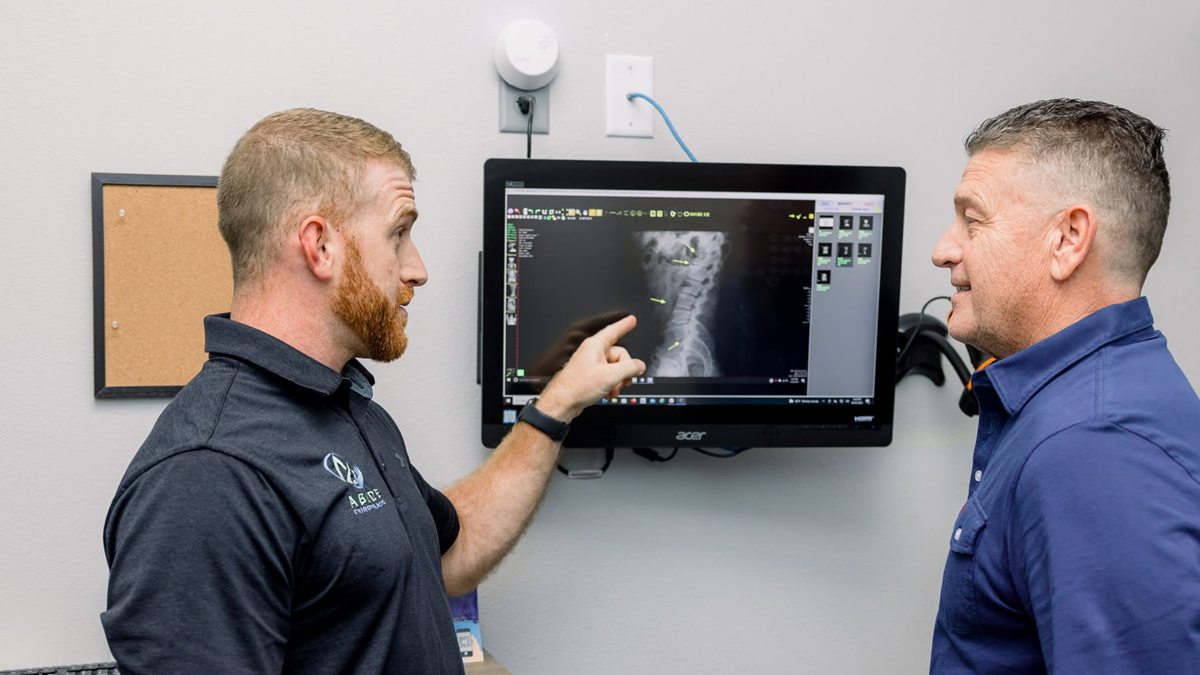
It starts with a conversation about what you're feeling, then a hands-on exam. Testing your reflexes, strength and sensation traces your symptoms back to a specific nerve, and that points us to the disc involved. Digital X-rays, when we need them, show your alignment and the space between your vertebrae. They don't show the disc itself, so if your exam suggests you need an MRI, we'll tell you and point you in the right direction. Already have one? Bring it.
Then we sit down and walk you through what we found in plain language: what's going on, where, and what we think will help. How those steps fall across your appointments depends on your situation, but the order never changes. Your first adjustment always comes after your report of findings.
What helps
Surgery is usually considered when other care hasn't worked or when there's significant nerve compression. For most disc pain, the first stop is care that takes pressure off the disc, and we offer two ways to do it under one roof:
- Adjustments restore motion to the joints around the disc. We match the technique to how irritated things are, including a low-force instrument adjustment or a drop table when a disc is sensitive.
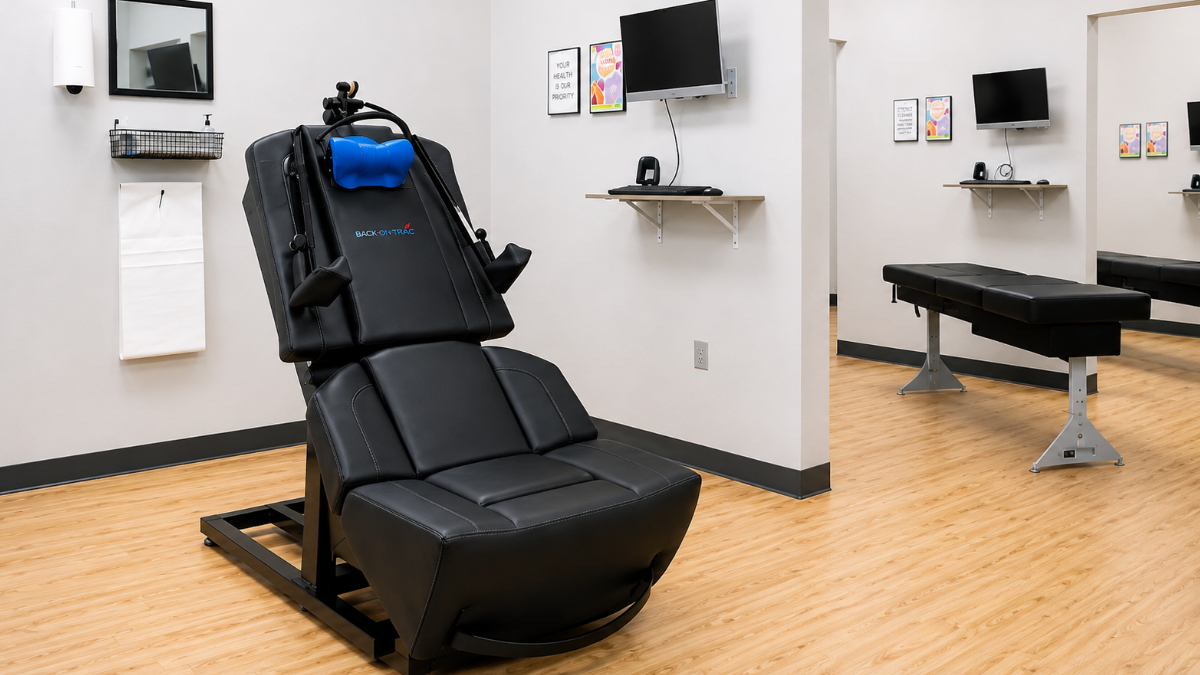
- Spinal decompression uses gentle, computer-controlled traction to take pressure off the disc and the nerve it's irritating. We use Back On Trac for the lower back and Cervi-Trac for the neck. Both are seated, with no straps and nobody lying face-down. Most patients find the sessions comfortable, and many find them relaxing.
Same doctors, one plan. That matters in Fayetteville, where most chiropractic offices offer adjustments only. For a disc problem, that usually means being sent somewhere else and starting over with someone who hasn't examined you. Here, decompression is in the same building as your adjustments. And for disc pain that hasn't budged with one approach, combining the two is often what makes the difference.
Many Fayetteville patients come to us after being told surgery is the next step, hoping to try everything else first. We can't promise you'll avoid it, and we won't pretend otherwise. If your case needs a surgical opinion, we'll tell you that, too.
When it's an emergency
Go to the ER right away if you lose control of your bladder or bowels, have numbness in your groin or inner thighs, or notice weakness in a leg or arm that's getting worse. Those can be signs of serious nerve compression that needs immediate medical care.
Find out which one you have
You don't need a diagnosis in hand to come in. Reading your own MRI isn't the point; working out what's pressing on what is.
If you're dealing with disc pain in Fayetteville, read more about how we treat it on our herniated disc page and about spinal decompression, then schedule an appointment. No referral needed. If you'd rather talk to a person first, call us at (479) 435-6888. That's genuinely fine. Our office is at 3761 Mall Ave, Suite 3, in north Fayetteville, by the Northwest Arkansas Mall.
Common Questions
Is a herniated disc worse than a bulging disc?
Not necessarily. A herniated disc is more likely to irritate a nerve, but plenty of bulges cause no symptoms and plenty of herniations settle down. How much it hurts depends on whether the disc is pressing on a nerve and which one, not on the label.
Can a herniated disc heal on its own?
Many herniated discs do get better over weeks to months, and surgery is usually considered only when other care hasn't worked or there's significant nerve compression. Waiting isn't always comfortable, though, which is why many people look for care sooner. We can't promise how your disc will respond, but an exam will tell you where things stand.
Will a herniated disc show up on an X-ray?
Not the disc itself. Digital X-rays show your alignment and the space between your vertebrae, which tells us a lot, but discs show up on an MRI. If your exam points that way, we'll tell you and point you to the right imaging.
Can a chiropractor make a herniated disc worse?
It's a fair question, and the answer starts with an exam. We don't adjust anyone until we've examined you and explained what we found, and for an irritated disc we have gentler options, including a low-force instrument adjustment, a drop table, and decompression, which involves no thrust at all. If your exam points to something we shouldn't treat, we'll tell you.
Where can I get spinal decompression in Fayetteville?
Abide Chiropractic offers it at 3761 Mall Ave, Suite 3, in north Fayetteville, using the seated Back On Trac system for the lower back and Cervi-Trac for the neck. It's part of the same care plan as your adjustments and is done by the same doctors who examined you, so there's no referral to another office.