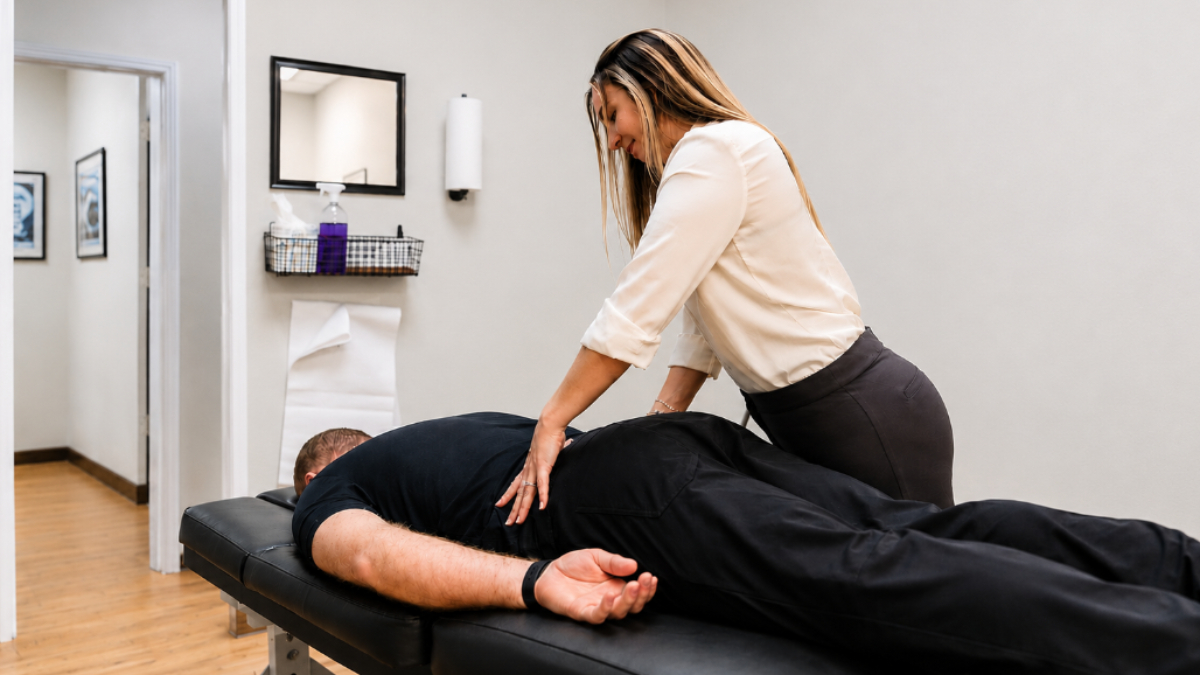
What Is a Webster Certified Chiropractor? A Fayetteville Mom's Guide to the Webster Technique
Your midwife mentioned the Webster Technique, or you found out your baby is breech and started searching. Here's what the technique actually is, what the certification behind it means, and what care looks like at each stage of your pregnancy.
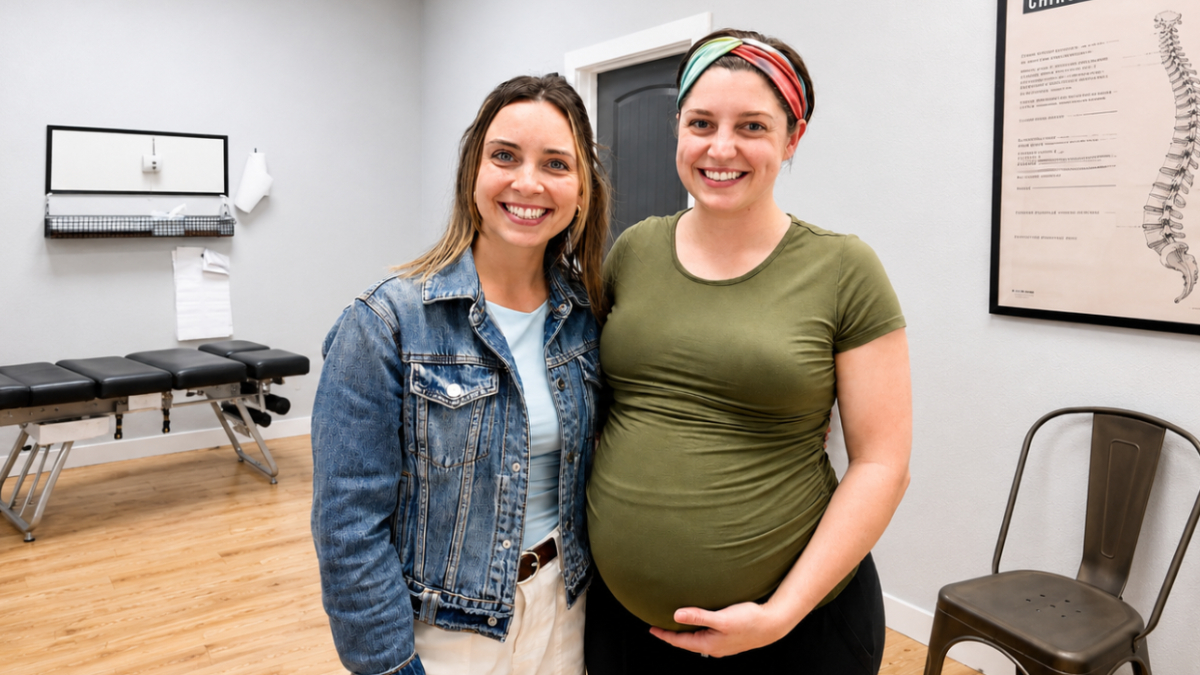
Somewhere around the second trimester, the Webster Technique tends to come up. Maybe your midwife brought it up. Maybe a friend swore by it. Or maybe you had a 32-week appointment, heard the word breech, and went straight to your phone.
Whichever way you got here, the questions are usually the same: what is this, is it safe for the baby, and does the person doing it actually have training in it? Those are the right questions, and they deserve straight answers.
The short version. The Webster Technique is a specific, gentle chiropractic adjustment of the sacrum and pelvis, developed for pregnancy. It works on your pelvis — never on the baby. "Webster Certified" is a real post-doctoral credential from the ICPA, earned through training, an exam, and active membership, and most chiropractors don't hold it. Dr. Watkins does, and every doctor here is trained in the adjustments prenatal and Webster care require. You can start in any trimester, though if your baby is breech, 32–34 weeks is the window worth calling about right away.
What the Webster Technique actually is
The International Chiropractic Pediatric Association defines the Webster Technique as a specific chiropractic analysis and gentle adjustment of the sacrum — the triangular bone at the base of your spine that forms the back of your pelvis. The aim is to reduce dysfunction in the sacrum and the sacroiliac joints so your pelvis can sit in proper balance, and to release tension in the ligaments and muscles surrounding the uterus.
It was developed by Dr. Larry Webster, who founded the ICPA after concluding that chiropractic could do considerably more for pregnancy and birth with a more specific approach to the pelvis.
One thing worth being completely clear about, because it's the question we get asked most: the Webster Technique works on the mother's pelvis, not on the baby. Your doctor never tries to touch, push, or turn your baby. Everything we do is aimed at the structures around the uterus — balancing the pelvis, easing ligament tension, and clearing interference in the nervous system that runs the whole show. What your body does with that space afterward is your body's own work.
That distinction matters for a second reason too. Our care at Abide is neurologically-based — we're working to remove interference so your body can do what it was designed to do. Pregnancy is the clearest example of that principle there is. Your body already knows how to grow and deliver a baby. Our job is to get in the way of that as little as possible.
What "Webster Certified" actually means
Here's the part most expecting moms don't realize: not every chiropractor is trained in prenatal care, and very few are Webster Certified.
The certification is a specific post-doctoral credential from the ICPA — the organization devoted entirely to prenatal and pediatric chiropractic. Earning it means completing focused Webster training, passing an exam, and maintaining active ICPA membership to keep the credential current. It sits well beyond a standard chiropractic degree.
So when you see "Webster Certified," you're looking at verified, pregnancy-specific training — not a general chiropractor who also happens to see pregnant patients.
Dr. Parker Watkins is Webster Certified, and every doctor on our team is trained in the adjustments prenatal and Webster care require. Dr. Kenzie Nowak is trained in prenatal and Webster adjustments as well, which also means there's a female chiropractor here if that's what you'd be more comfortable with — a lot of moms tell us it is, and it's a completely reasonable thing to ask for.
Caring for expecting mothers is core to what we do here, not an add-on to a general practice.
Why pelvic balance matters so much in pregnancy
Pregnancy asks an enormous amount of your body in a short stretch of time.
As your baby grows, your center of gravity shifts forward and your posture changes to compensate. At the same time, the hormone relaxin does exactly what its name suggests — it loosens the ligaments around your pelvis in preparation for birth. Both of those are normal and necessary. Together, they also mean your pelvis can drift out of balance more easily than at any other point in your life.
When it does, a few things tend to follow:
- Pain that's hard to escape. Low back pain, SI joint pain, hip pain, round ligament pain, and the sharp, shooting pregnancy sciatica that makes rolling over in bed an event.
- Tension in the surrounding soft tissue. Tight ligaments and muscles pull unevenly on the pelvis and on the uterus attached to it.
- Less room for your baby to work with. A balanced pelvis simply gives your baby more space to grow and to settle into position.
Keeping the sacrum and SI joints moving and balanced takes pressure off all of it. That's why so many of our patients describe their pregnancy as noticeably more comfortable once they start care — and why plenty come back for the next one before anything hurts at all.
Is it safe? And what does a visit actually feel like?
Gentleness is the entire point.
There's no aggressive twisting, nothing forceful, and nothing that goes anywhere near your belly. Webster care uses specific, low-force adjustments — and the analysis in front of them matters as much as the adjustment itself.
The practical side matters too. We use pregnancy-specific tables and cushions built to accommodate a growing belly, so you're never face-down and never asked into a position that feels precarious. You stay fully clothed the whole time. Adjustments are modified for whichever trimester you're in, because what works comfortably at 12 weeks isn't what works at 36.
Most moms tell us it's the most relaxed part of their week. Visits are quick and easy to fit around everything else you're juggling, which matters when you're already booked solid with OB appointments.
If you've just found out your baby is breech
This is the reason a lot of moms find us, so let's be direct about it.
Published research on the Webster Technique reports an 82% success rate for babies turning to the head-down position. That's an encouraging number, and it's also a number — not a promise about your pregnancy. What we can tell you honestly is that the technique is designed to remove the constraint, and that your odds are better with more runway.
Which is the actionable part: call as soon as you learn your baby's position. The window worth aiming for is around 32–34 weeks, typically early in the third trimester. Starting at 38 weeks isn't pointless, but it gives your body far less time to respond than starting at 32.
If you're reading this at 36 weeks, call anyway. We'd rather have the conversation and tell you honestly what we think is realistic than have you assume you've missed the window.
When should you start?
Earlier is better, and there's rarely a wrong time to begin.
You can start as early as your first trimester to establish good pelvic balance from the beginning, though plenty of women begin in the second when the physical changes start making themselves known. Because pregnancy changes your body continuously, care through all three trimesters keeps the pelvis balanced as you adapt week to week — rather than waiting until discomfort has already set in and trying to dig out from under it.
And care doesn't stop at delivery. Birth is a significant physical event, and postpartum adjustments help restore alignment, address what delivery asked of your body, and support you through a season where you're carrying, feeding, and sleeping in positions no one would design on purpose. Many of our moms carry straight on into pediatric care for the baby, which is a different conversation but the same philosophy.
What becoming a patient here looks like
There's one new patient process at Abide, and everyone goes through it — pregnancy included. It's the same process laid out in our new patient walkthrough, with one difference worth naming: we don't take X-rays during pregnancy. Prenatal evaluation is hands-on.
- A free consultation. We sit down and talk through your pregnancy, how far along you are, what's been uncomfortable, what your OB or midwife has said, and what your goals are for birth.
- A hands-on exam. Assessment of your pelvis, spine, and posture to find where the imbalance actually is.
- Your report of findings. Your doctor walks you through what we found in plain language, explains the technique, and gives you a straight answer on how we think we can help.
- Your care plan. What we recommend, how often, and how that changes by trimester — built around your findings and your goals. Then it's your call.
How those steps fall across your appointments depends on your situation. What never changes is the order: your first adjustment always comes after your report of findings, never before it. We'd rather understand exactly what we're working with than start adjusting on a hunch, particularly during pregnancy.
That free consultation is also the screening step, and it comes first for a reason. If it becomes clear that what you need is something other than what we do, we'll say so and point you in a better direction. You've got enough on your plate without being talked into care that isn't right for you.
On cost: many insurance plans cover prenatal chiropractic care, and coverage varies enough plan to plan that the only reliable answer is a phone call. Give the office a call at (479) 435-6888 and we'll verify your specific benefits before your first visit.
Webster Certified care in Fayetteville
If you've been looking for a Webster Certified chiropractor in Fayetteville, you don't have to drive to Rogers or Bentonville to find one. We care for expecting moms from Fayetteville, Springdale, Johnson, Elm Springs, and across Northwest Arkansas every week — over 1,000 families have trusted us with their care, and we're one of the highest-rated practices in the area at 4.9 stars across 223+ Google reviews.
More to the point, we love this part of the work. Walking with a family from a first-trimester visit to a newborn on the adjusting table is the best thing we get to do.
Book your prenatal visit
Read the full details on our pregnancy care page, then schedule an appointment at a time that works for you — the consultation is free, and it's the only way to get an answer specific to your pregnancy rather than a general one. If your baby is breech, call us at (479) 435-6888 rather than booking online, and we'll get you in as soon as we can. Our office is at 3761 Mall Ave, Suite 3, here in Fayetteville.
Common Questions
Is the Webster Technique safe during pregnancy?
Yes. It uses gentle, low-force adjustments with no twisting and nothing applied to your belly, and we use pregnancy-specific tables and cushions so you're never face-down. Adjustments are modified for whichever trimester you're in, and you stay fully clothed throughout.
Does the Webster Technique turn the baby?
No — and that's an important distinction. The technique works on your pelvis, never on your baby. Your doctor never tries to touch, push, or turn the baby. The goal is to balance the sacrum and pelvis and release tension in the surrounding ligaments, which gives your baby more room to move into position on their own.
How is Webster different from a regular adjustment?
A regular adjustment isn't tailored to pregnancy — it's the same technique used on any patient. Webster is built around pregnancy from the ground up: specific positioning, a specific analysis of the sacrum and pelvis, and a certification our doctors completed specifically for expecting mothers.
My baby is breech. When should I come in?
As soon as you know. Published outcomes report an 82% success rate for babies turning to the head-down position with this technique, and starting around 32–34 weeks gives your body the most runway to respond. If you're further along than that, call anyway — we'll tell you honestly what we think is realistic.
Is there a female chiropractor available?
Yes. Dr. Kenzie Nowak is trained in prenatal and Webster adjustments, and you're welcome to request her when you book.
Do you take X-rays during pregnancy?
No. Prenatal evaluation here is hands-on — an assessment of your pelvis, spine, and posture.