Sciatica Worse at Night? Here's Why, and What Helps in Fayetteville
The leg that behaved all day starts up at 2 a.m. Here's why sciatica gets louder after dark, a few things that make tonight easier, and what Fayetteville patients can do about the cause.
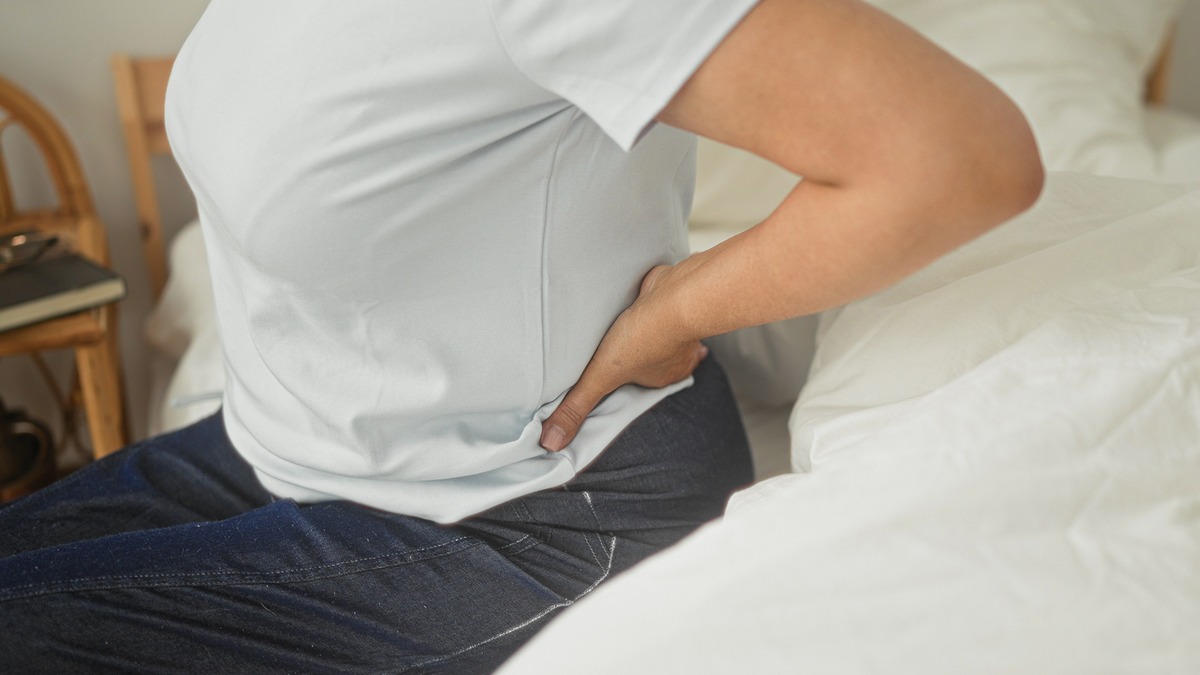
It's 2 a.m. You've tried your left side, your right side and a pillow between your knees. The leg that got you through the workday is burning, aching or buzzing, and the clock says there are hours left before the alarm.
If that's your night in Fayetteville, you're not imagining it. Sciatica that gets louder after dark is one of the most common things people tell us, and it's one of the most useful. The pattern says something about what's irritating the nerve.
The short version. Sciatica often feels worse at night because nothing is distracting you, you're in one position for hours, and the disc or joint bothering the nerve never gets a break. Your day matters too: hours of sitting, lifting or driving load your lower back, and bedtime is when it catches up. A few position tweaks can make tonight easier, but they don't change what's irritating the nerve. Finding that out is what an exam is for.
Why sciatica gets louder after dark
A few things stack up at once.
Nothing else is competing for your attention. During the day you're moving, working, talking and driving. At night the house goes quiet and the leg gets your full attention. That doesn't mean it's in your head. It means you're finally noticing all of it.
You're in one position for hours. Lying on your back, on your side with the top knee dropped forward, or on your stomach each loads your lower back and pelvis a little differently. If a nerve is already irritated, a position that pulls or squeezes it keeps doing that for as long as you stay put. That's why you can shift, get a few minutes of relief, and then feel it start up again.
Your spine gets a break from gravity. Discs take on fluid while you're off your feet, which can add a little pressure when a disc is already close to a nerve.
The day you had matters, too
Night pain rarely starts at night. It's the end of a day of load, and the days around Fayetteville look familiar: eight hours at a desk off College Avenue, a shift on a warehouse or distribution floor, a line at a poultry or food-processing plant, farm work, or a long drive up and down I-49.
A day like that doesn't cause sciatica on its own. But it asks a lot of a lower back that's already irritated, and the bill tends to arrive around bedtime.
What your nights are telling us
Sciatica comes from a nerve that's irritated or pinched near your spine. The usual suspects are a bulging or herniated disc, a stuck joint in your lower back or pelvis, or the changes of pregnancy. Where the pain travels, which positions set it off and what you've already tried all help point to which one.
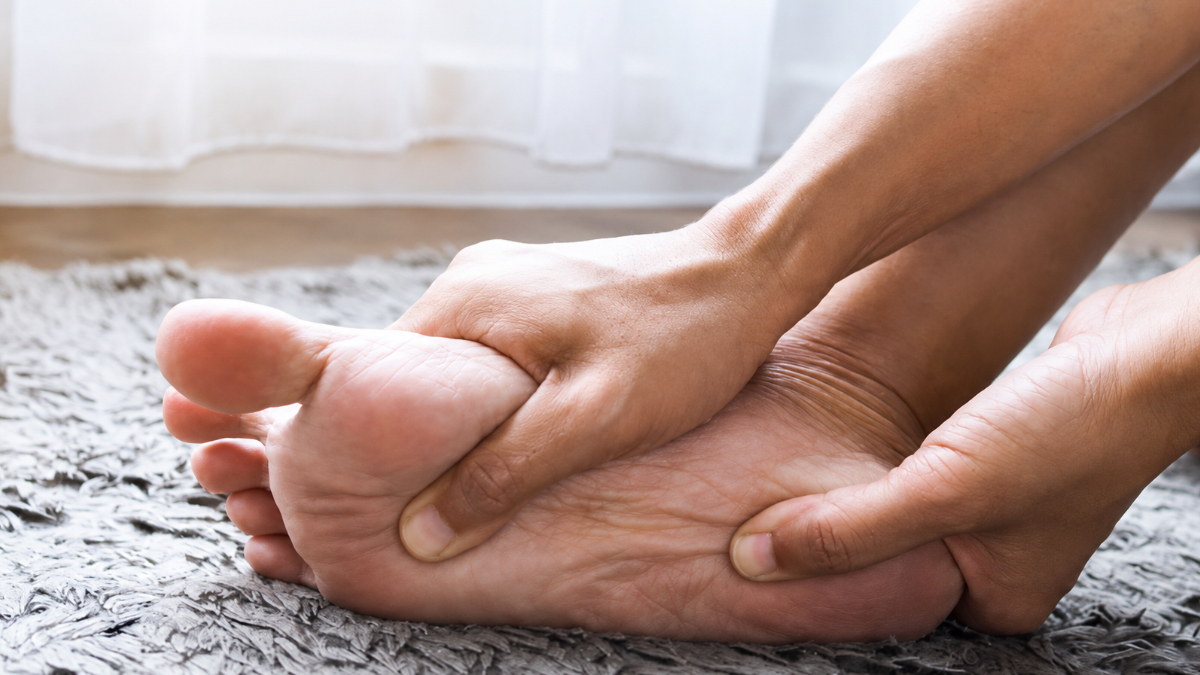
Tell us when it's worst. And if the pain travels past your knee, or you have numbness or tingling in your foot, mention that, too. Those details matter.
A few things that make tonight easier
These won't fix anything, but they can take the edge off:
- On your side: put a pillow between your knees so your top leg doesn't pull your pelvis and lower back out of line.
- On your back: put a pillow under your knees to ease the load on your lower back.
- On your stomach: if you can, avoid it. It tends to arch the lower back.
These can make a night more bearable. They don't change what's irritating the nerve, and that's the part worth finding out.
How we find out what's going on
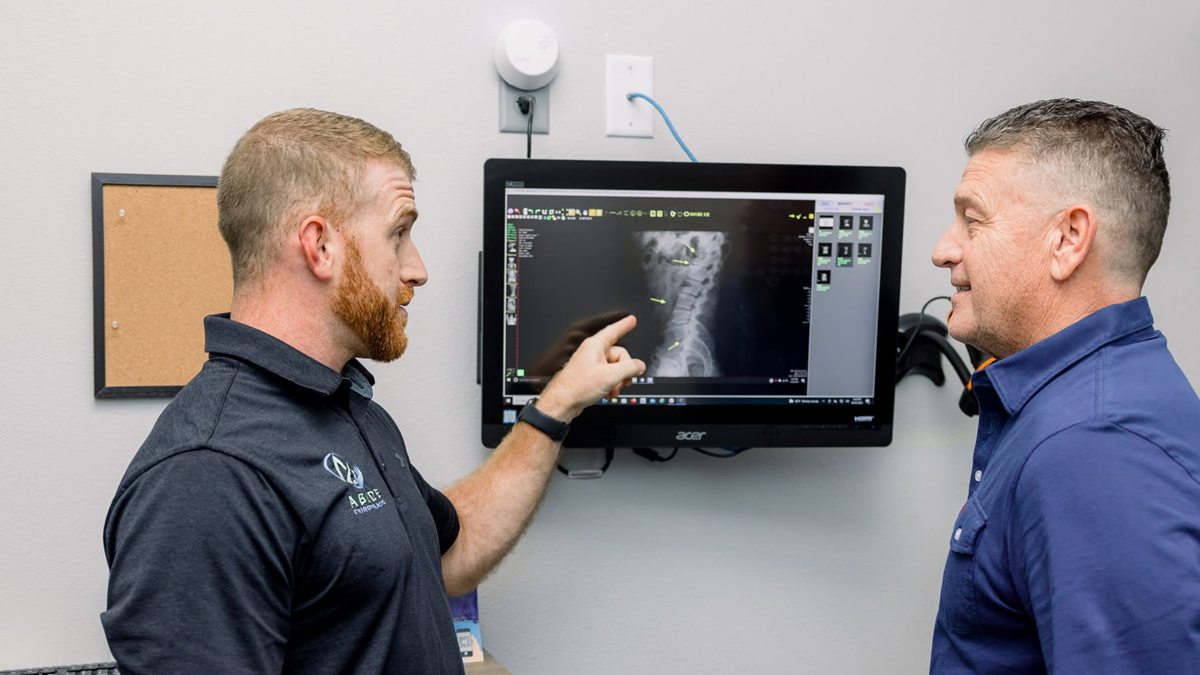
We start sitting down, not on a table, with you telling us when the pain began, where it travels and what you've already tried. Then comes the exam. Checking the strength, reflexes and feeling in your legs tells us which nerve is involved. When we need a closer look, digital X-rays taken right here in the office show how your lower back and pelvis line up and how much room there is between your discs. A disc itself won't appear on an X-ray, so if your exam suggests an MRI, we'll say so.
After that, we walk you through what we found in plain language: what's irritating the nerve and what we think will help. Which appointment that happens at depends on your situation. The sequence doesn't change, though. Your first adjustment comes after that conversation, never before it.
What helps
Adjustments can take pressure off an irritated nerve by restoring motion where a joint has stopped moving well. We lead with the Torque Release Technique, a gentle, low-force adjustment delivered with a handheld instrument, and we use a drop table or a skilled manual adjustment when it's the better fit for you. Your doctor explains what any of them involves before doing it, and we adjust the plan to how your body responds.
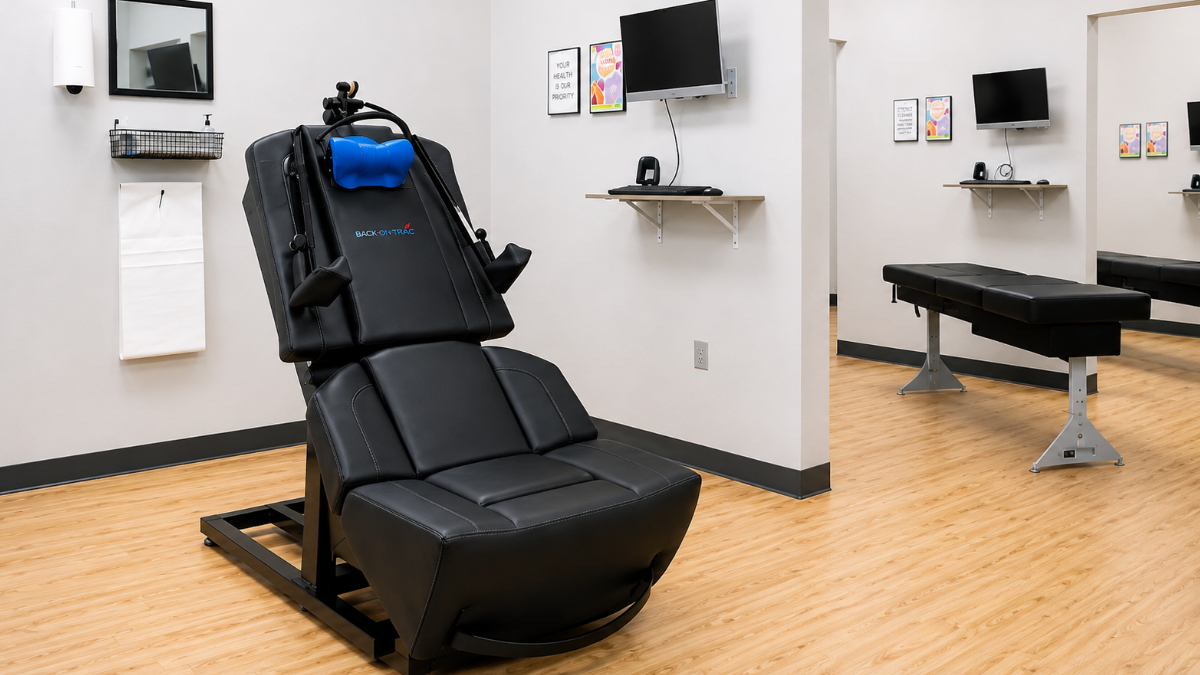
Spinal decompression comes in when a disc is the problem. On our Back On Trac system, a computer guides gentle traction that eases the load on the disc so the nerve has room to settle down. There are no straps and no lying face-down. You sit comfortably through it, which is worth knowing if lying flat is exactly when your leg flares up. Decompression usually works best as a series of sessions rather than one visit, since relief builds gradually.
Here's why that matters in Fayetteville. Most chiropractic offices offer adjustments only, so a disc case often means a referral across town. At Abide, adjustments and decompression are part of one plan, and the doctors who examined you run both, so you're not starting over with someone new.
We can't promise how fast your leg will settle. Sciatica from a disc usually takes longer than sciatica from a stuck joint, and we'll give you a realistic picture at your report of findings. If your exam points to something outside what we offer, we'll tell you plainly and point you toward the right next step.
If you're pregnant
Sciatica is common as your body changes to make room for the baby, and it's often at its loudest at night. Dr. Watkins is Webster Technique certified, we use pregnancy-specific tables and cushions so you're never face-down, and a female chiropractor is available. We don't use decompression during pregnancy. There's more on our pregnancy care page.
When it's an emergency
Head to the ER right away if you lose control of your bladder or bowels, notice numbness in your groin or inner thighs, or find your leg getting weaker. Those can signal severe nerve compression, and that needs medical care right now.
Find out what's pressing on the nerve
You don't need a diagnosis or a referral to come in. If sciatica is costing you sleep, take a look at how we approach it on our sciatica page and our spinal decompression page, then schedule an appointment. Would you rather talk first? Call (479) 435-6888 and ask us anything. You'll find us at 3761 Mall Ave, Suite 3, in north Fayetteville, by the Northwest Arkansas Mall.
Common Questions
Why is my sciatica worse at night?
A few things stack up at once. Nothing is distracting you from the pain, you stay in one position for hours, and discs take on fluid while you're off your feet, which can add pressure if one is already close to a nerve. A long day of sitting, lifting or driving adds to it. Where the pain travels and which position sets it off help us work out what's irritating the nerve.
What's the best way to sleep with sciatica?
There's no single best position, because it depends on what's irritating the nerve. Many people do better on their side with a pillow between the knees, or on their back with a pillow under the knees. Stomach sleeping tends to be hardest on the lower back. These can make a night more bearable, but they don't change what's causing the pain.
Can a chiropractor help sciatica that's worse at night?
It can start there, and it starts with an exam, not an adjustment. We test the strength, reflexes and sensation in your legs to find which nerve is involved, explain what we found, and match your care to it. That can include a gentle, low-force adjustment and, when a disc is the problem, seated decompression. We can't promise how your body will respond, and if the exam shows something that isn't a fit for chiropractic, we'll say so.
When should I get my sciatica checked?
If it keeps waking you up, if the pain travels past your knee, or if you notice numbness or tingling in your foot, it's worth an exam, and you don't need a referral. If you lose control of your bladder or bowels, notice numbness in your groin or inner thighs, or find your leg getting weaker, go to the ER right away.
Where can I get sciatica treatment in Fayetteville?
Abide Chiropractic is at 3761 Mall Ave, Suite 3, in north Fayetteville, by the Northwest Arkansas Mall. Adjustments and seated Back On Trac decompression are both available in our office, run by the doctors who examine you, and you don't need a referral. Call (479) 435-6888 or book online.